
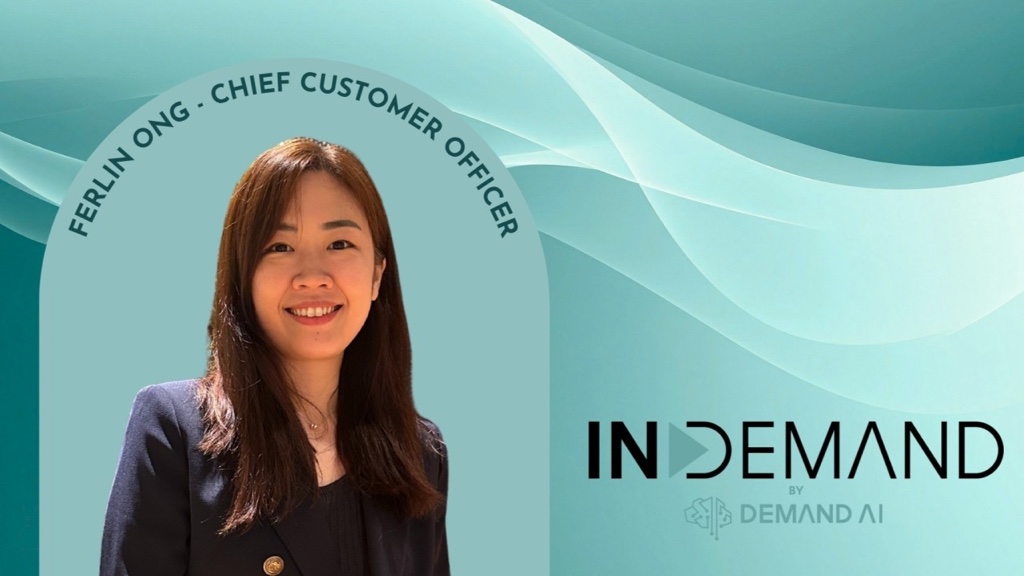
Ferlin Ong, Chief Customer Officer, Demand AI
A big misconception in B2B marketing is that buyers want to speak to sales teams as early as possible.
Today's buyers often want the opposite.
Modern B2B buyers are self-directed. They want to research independently, compare providers privately, validate claims through third-party sources, and educate themselves before engaging with a salesperson.
That's a good thing.
Research from Gartner suggests that B2B buyers spend only 17% of their buying journey meeting with potential suppliers. When multiple vendors are being considered, the time spent with any individual supplier becomes incredibly small.
Meanwhile younger, digitally native buying committees expect consumer-style digital experiences. Immediate access to information, and low-friction engagement.
That changes the role of marketing significantly.
Insights, not outreach
For years, many B2B organisations approached marketing as a funnel designed to push buyers toward sales conversations. Gated PDFs, form fills, nurture streams, qualification stages. All are designed around moving prospects through linear, predefined steps.
But buyers don't act that way. They move fluidly across channels, platforms, communities, AI search tools, analyst reports, peer recommendations, and vendor content ecosystems. They are gathering information constantly, often anonymously, and using AI to help them interpret what they find.
Buyers don't necessarily want more outreach. They want better understanding. And in my experience, trust is built when organisations respect that behaviour rather than trying to interrupt it. No buyer is going to tell a vendor their budget or decision timeline before trust is established. BANT — is an internal sales tool, it reflects where a buyer is, not something you can ask your way into. Chasing it too early doesn't accelerate the deal; it signals you're not ready to earn the relationship.
Enabling exploration, generating signals
The future of B2B engagement is less about controlling journeys and more about enabling exploration. The best marketing experiences today allow buyers to interrogate content on their own terms.
Buyers can ask questions and explore specific topics. They have the option to summarise and compare information. In short, the best marketing outreach allows buyers to find the precise insights they need for their own decision-making process.
This is where AI becomes valuable. AI platforms like Demand AI's are not a replacement for human relationships. But they can be a bridge between buyers and understanding.
According to Forrester research, buyers increasingly prefer self-service digital experiences during the early stages of purchasing decisions. And there's another important shift happening because of that.
When buyers engage with content through conversational interfaces like ours, they share far richer intent signals than traditional digital interactions ever provided. Not just clicks and downloads, but verbatim questions that reveal genuine concerns and priorities. That should change everything for marketers.
Because understanding buyer behaviour has always been the real challenge in B2B marketing. The industry has spent years optimising for activity metrics while often learning little about what buyers really needed.
Real buyer intent
Now, for the first time, marketers can understand real intent in context.
We can see what information buyers are seeking, which tells us which topics matter most, where uncertainty exists, and how engagement evolves over time.
Smart marketers use those insights to create better content, experiences, and customer relationships. This is why I believe trust is becoming one of the most important competitive advantages in modern B2B marketing.
Buyers trust organisations that help them learn. They trust companies that make information accessible. And they trust experiences that feel useful rather than intrusive.
The organisations that succeed in the next phase of B2B marketing won't necessarily be the loudest or the most aggressive. They'll be the ones that understand how modern buyers want to engage, and build experiences around that reality.
This article was first published in Demand AI’s In Demand newsletter on LinkedIn. Talk to Demand AI about how we can help.