
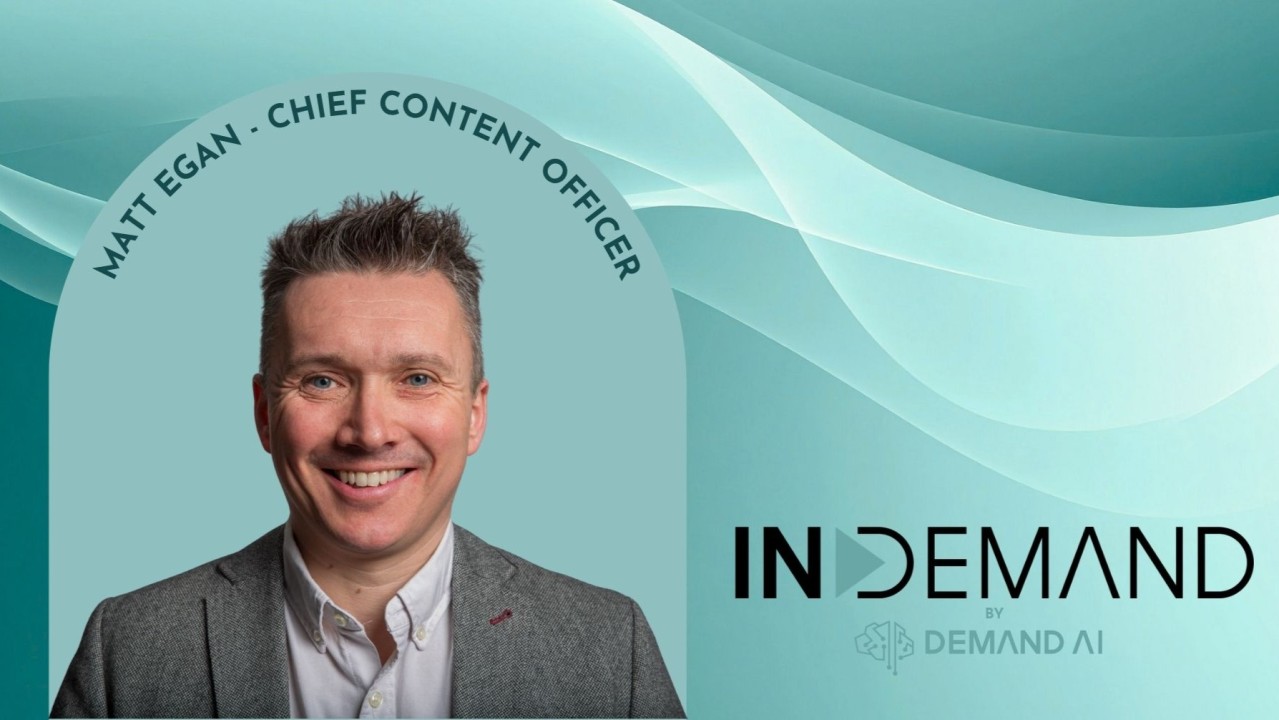
Matt Egan, Chief Content Officer, Demand AI
In recent memory a successful B2B marketing campaign may have been judged by a simple question: “How many leads did we generate?”
It’s an understandable metric. Marketing generates contacts. Sales follow up. Some opportunities turn into pipeline. Some of those might even become customers (and if they do, Marketing will definitely not get credit).
If you have worked in B2B marketing during the past two decades you will almost certainly have operated some version of this approach.
A New Approach
That’s changing. Spend time talking to modern B2B marketers and you’ll notice that the conversation has shifted. Innovative marketers are asking fewer questions about volume and many more about understanding.
Who is in market? What problems are they trying to solve? Why are they engaging with this content? What should my sales team know before they pick up the phone?
These are very different questions, and they reflect a wildly different buying journey.
Today’s B2B buyers don’t begin with a salesperson. They self-direct initial research. They ask AI, read reviews, consume thought leadership. They watch webinars and compare buyer opinions long before they identify themselves to a vendor. By the time that buyer is ready to have a commercial conversation, they’ve often educated themselves remarkably well.
That means the job of marketing has changed. We’re no longer simply generating names for sales teams to call. We’re helping sales understand when a buyer is ready and why. And what they want to talk about.
To me, that’s a much more valuable contribution, for buyers and sellers.
Not More Leads
Sales teams don’t wake up hoping for another hundred names to work through. They want meaningful conversations with people who have a genuine business challenge and a reason to solve it. They want to talk to customers who want to buy.
Buyers want the same thing.
Nobody enjoys being contacted before they’re ready. Even worse is an irrelevant conversation.
When marketers can identify genuine buying signals rather than simply collecting contact details, everybody benefits. Sales teams spend more time speaking to the right people. Buyers receive more relevant conversations. Marketing demonstrates measurable commercial impact rather than simply activity.
The challenge: this requires a different mindset.
For years we’ve optimised campaigns around downloads, registrations, and form fills because they are easy to measure.
But those metrics only tell us that someone engaged.
They rarely tell us why.
That’s where AI is changing the equation.
Contextual Conversations
When buyers engage with content conversationally, something remarkable happens. They don’t just consume information; they ask questions. They explore topics. They dig deeper into the issues that matter to them. In doing so, they reveal context that traditional lead-generation tactics have never been able to capture.
Those interactions create something far more valuable than another contact record.
They create insight.
At Demand AI, we’ve become fascinated by those insights. (Side note: the opportunity to create meaningful and relevant content based on those insights is why I joined Demand AI. I want to do marketing that influences good outcomes for everyone. And now I can.)
Through our Insyte pages on the Amplifye.ai platform, buyers can engage directly with vendor content using conversational AI. That means our customers don’t just know which content attracted attention — they understand the questions buyers asked, the information they were seeking and, ultimately, where they are in their buying journey.
Insights At Scale
What’s even more exciting is what happens at scale.
Across thousands of buyer interactions, patterns begin to emerge. You start to understand the topics buyers care about most, the questions they’re asking and the challenges they’re trying to solve. That intelligence helps marketers create more relevant content, engage buyers more effectively and equip sales teams with richer context before the first conversation ever takes place.
For me, that’s where modern marketing is heading.
Not away from leads — but beyond them. The future doesn’t belong to organisations with the biggest database or the highest lead volumes. Winners are those that best understand the signals their buyers are already giving them.
And in a world where buyers increasingly choose to educate themselves before they choose a supplier, understanding those signals is the most valuable capability a marketer can possess.