
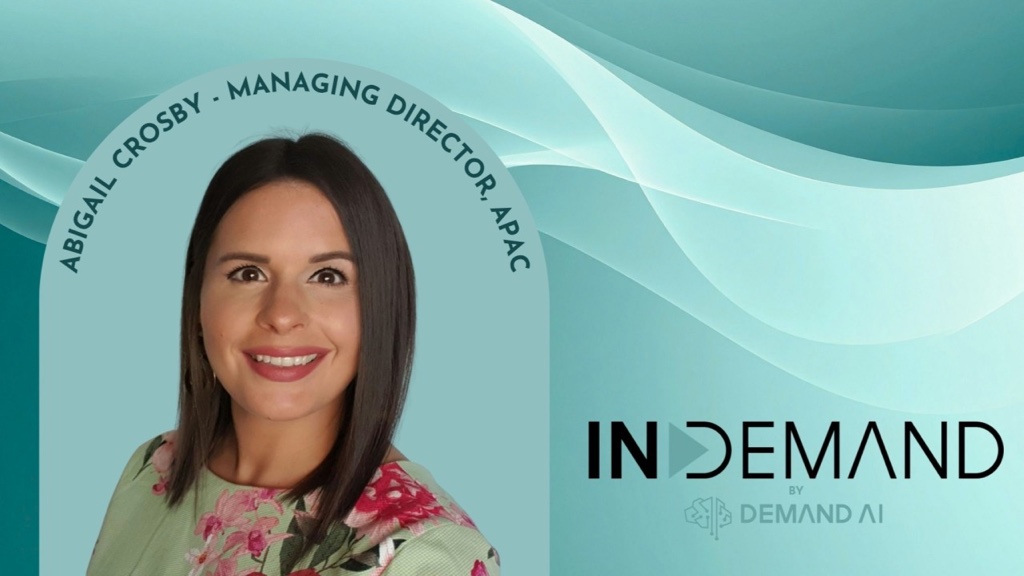
Abigail Crosby, Managing Director APAC, Demand AI
I've spent most of my career working with marketers. From the UK to Singapore, from traditional media to digital transformation, from brand-building to demand generation, one thing has remained consistent: trust is hard to earn and easy to lose.
That has never been more true than it is today.
We are living through a period where content is being produced at a scale that would have been unimaginable even just a few years ago.
AI has accelerated content creation dramatically. Research from Gartner suggests that by 2027, generative AI will be involved in the creation of a significant proportion of digital content consumed online. Meanwhile, marketers are under pressure to publish more, personalise more, and engage more audiences than ever before.
The result is a paradox. There is more content available than at any point in history. Yet trust in content is becoming harder to establish.
Content that buyers believe
In my conversations with marketing leaders across APAC, I see the same challenge emerging repeatedly. The problem is no longer creating content. The problem is creating content that buyers believe.
Because content alone does not build trust. Credible content does.
According to Edelman's Trust Barometer, trust is one of the most important factors influencing purchasing decisions, particularly in business environments characterised by uncertainty and rapid change. Buyers increasingly seek information from multiple sources before making decisions, validating claims through peer networks, industry experts, analysts, communities, and independent research.
Buyers don't simply consume content anymore, they interrogate it. Increasingly they do so long before they ever speak to a salesperson.
Gartner has shown that B2B buyers spend only a small proportion of their purchasing journey engaging directly with suppliers. Much of the process is now self-directed, with buyers independently educating themselves through digital channels.
That shift should fundamentally change how marketers think about content.
For years, many organisations approached content as a volume exercise. More blogs. More eBooks. More whitepapers. More campaigns.
But volume is no longer the challenge: authority is.
Expertise and credibility
Credible content demonstrates expertise. It is based on evidence. It addresses genuine customer challenges. It acknowledges complexity rather than oversimplifying it. Most importantly, it helps buyers make better decisions.
I often advise marketing teams to ask a simple question: “Would this content still be valuable if the reader never bought our product?” If the answer is yes, you're probably creating something useful.
If not, you may be creating promotion rather than insight.
The most effective organisations today are building content ecosystems rather than content libraries. They are investing in thought leadership, subject matter expertise, research, customer stories, and practical guidance that helps buyers navigate increasingly complex decisions.
They understand that credibility compounds over time. And technology is changing how that credibility is measured.
Quality and authority
As buyers increasingly use AI-powered search, answer engines, and conversational interfaces to research solutions, the quality and authority of content becomes even more important. AI can help surface information, but it cannot create trust on its own. Trust still comes from expertise, transparency, consistency, and relevance.
The marketers who will succeed in the next decade won't necessarily be the ones creating the most content. They will be the ones creating the most credible content.
Because in a world overflowing with information, credibility is becoming one of the most valuable competitive advantages a brand can have. And that's something no amount of content volume can replace.
This article was first published in Demand AI’s In Demand newsletter on LinkedIn. Talk to Demand AI about how we can help.